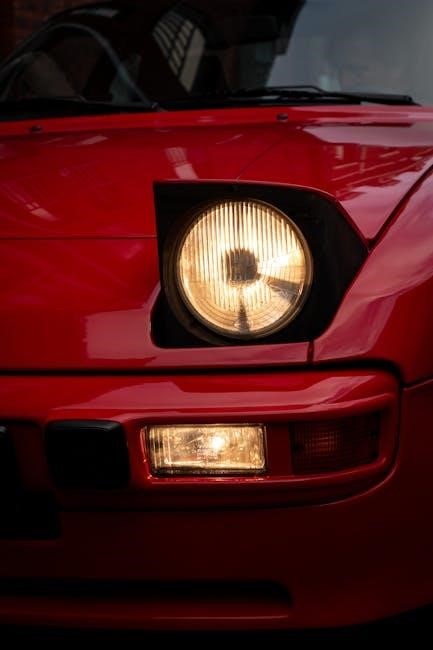
This exploration delves into the 1987 Porsche 944 color brochure, a vital resource for enthusiasts and restorers seeking authentic factory finishes.
Significance of Original Porsche Documentation
Original Porsche documentation, like the 1987 944 factory colors brochure, holds immense value for collectors and those restoring these iconic vehicles. These brochures aren’t merely marketing materials; they represent a direct link to Porsche’s original intent regarding aesthetics and specifications. They provide definitive proof of factory-applied colors, interior trim combinations, and available options.
Accurate restoration relies heavily on verifying original details, and the brochure serves as a primary source. It helps avoid inaccuracies stemming from memory, reproduction guides, or differing interpretations. Furthermore, these documents contribute to the historical record, preserving Porsche’s design heritage for future generations. The brochure’s authenticity is paramount in judging concours condition and maintaining the vehicle’s investment value.
Scope of this Article: Focusing on the 1987 Brochure
This article concentrates specifically on the 1987 Porsche 944 factory colors brochure, analyzing its contents and relevance to modern enthusiasts. While the 944 spanned several years with evolving color palettes, we will limit our examination to the options presented in this particular brochure. We will dissect the color swatches, paint codes, and interior coordination suggestions offered by Porsche in 1987.
The aim is to provide a detailed resource for identifying original colors, understanding Porsche’s coding system, and assisting in accurate restoration projects. Discussions of other model years or brochures will be avoided to maintain a focused and comprehensive analysis of the 1987 offerings.
Historical Context of the 1987 Porsche 944
The 1987 Porsche 944 represented a maturing design, benefiting from years of refinement and establishing itself as a popular sports car choice.
944 Model Year Evolution (1982-1991)
The Porsche 944 underwent significant evolution throughout its decade-long production run, starting in 1982 and concluding in 1991. Initial models featured a 2.5-liter inline-four engine, gradually increasing in displacement and power. Early years saw refinements to suspension and braking systems, enhancing handling and performance.
By 1985, the 944 gained popularity, leading to the introduction of the 944 Turbo. The later years, including 1987, witnessed further improvements in engine management and interior appointments. The 944 S and 944 S2 variants offered enhanced performance characteristics. This continuous development ensured the 944 remained competitive within its segment, appealing to a broad range of driving enthusiasts.
1987 as a Key Year for 944 Development
1987 represented a pivotal year in the Porsche 944’s development cycle, solidifying its position as a refined and capable sports car. This year saw notable enhancements to the existing platform, focusing on both performance and driver experience. Improvements were made to the suspension geometry, resulting in more precise handling and increased stability.
Furthermore, refinements to the engine management system contributed to improved fuel efficiency and throttle response. The 1987 model year also offered a wider range of optional equipment, allowing buyers to personalize their 944s. This combination of upgrades made the 1987 944 a particularly desirable iteration.
Understanding Porsche Color Codes & Paint Options
Decoding Porsche’s paint system is crucial; the 1987 brochure utilizes specific codes to identify each color, from solids to coveted special order hues.
Porsche Paint Code System Explained
Porsche’s paint code system, as detailed within the 1987 brochure, is a multi-character alphanumeric designation. These codes weren’t simply arbitrary; they provided precise instructions for mixing the original factory finishes. Typically, a code begins with a number indicating the color family, followed by letters denoting the specific shade within that family.
Understanding this system is paramount for accurate restoration. The brochure itself serves as a key to deciphering these codes, linking them directly to the available colors for the 944 in 1987. Modern paint suppliers can utilize these codes to formulate matching paints, ensuring authenticity. Variations existed, including codes for special order or “Grand Prix” colors, often requiring additional documentation beyond the standard brochure.
Solid Colors Available in 1987
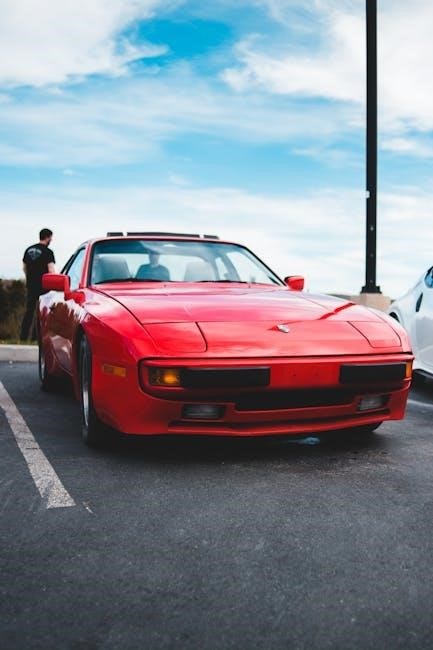
The 1987 Porsche 944 brochure showcased a selection of solid color options, offering a classic, single-stage finish. Alpine White (Code 047) remained a popular choice, providing a clean and timeless aesthetic. Black (Schwarz, Code 041) offered a sophisticated and sporty appearance, while Guards Red (Rot, Code 044) delivered a vibrant and iconic look.
These solid colors represented the base palette, often being the most affordable options. The brochure clearly displayed swatches of each, though slight variations could occur due to printing processes. These colors provided a durable finish, though susceptible to UV damage over time, a common issue for vehicles of this era.
Metallic Colors Available in 1987
The 1987 Porsche 944 brochure featured several attractive metallic paint options, adding depth and shimmer to the vehicle’s appearance. Marine Blue Metallic (Code 31E) was a standout, offering a sophisticated and elegant hue. Silver Metallic (Code 92W) provided a classic, sporty look, enhancing the 944’s lines. Other metallic shades, though potentially available as special orders, weren’t prominently featured.
These metallic finishes involved a multi-layer application, increasing cost but delivering a richer aesthetic. The brochure’s color swatches aimed for accuracy, but variations were possible. Metallic paints, like solids, were vulnerable to fading and UV damage, requiring careful restoration considerations.
Special Order/Grand Prix Colors (Limited Availability)
The 1987 Porsche 944 brochure primarily showcased standard colors, but special order or “Grand Prix” colors existed for discerning clients. These options, often linked to Porsche’s racing heritage, were significantly more expensive and required extended lead times. Documentation regarding these shades is scarcer within the standard brochure itself.
Availability varied greatly by region and dealer discretion. While not explicitly detailed in the 1987 brochure, records suggest colors like Signal Orange or other vibrant hues could be requested. Identifying these rare finishes necessitates deeper research into Porsche archives and original sales documentation, making verification challenging.
Detailed Analysis of the 1987 Brochure Contents
The brochure’s layout systematically presents color swatches, coordinating interior options, and paint codes, offering a concise visual guide for 1987 944 configurations.
Brochure Layout and Design
The 1987 Porsche 944 factory colors brochure exhibits a clean, functional design typical of Porsche documentation from that era. It prioritizes clarity and ease of reference for potential buyers and dealerships. The brochure isn’t overly flashy; instead, it focuses on presenting the available color options in a straightforward manner.
Typically, the brochure features a series of pages dedicated to exterior colors, each displaying a color swatch alongside its corresponding Porsche paint code. Interior color options are often presented on separate pages, demonstrating suggested combinations with the exterior finishes. The layout is logical, guiding the viewer through the available personalization choices.
Photographs of the 944 showcasing various color combinations are strategically placed throughout, providing a realistic visual representation. The overall aesthetic is professional and understated, reflecting Porsche’s brand image of quality and performance.
Color Swatches and Accuracy
The color swatches within the 1987 Porsche 944 brochure are generally considered reasonably accurate representations of the actual paint colors, though some variation is inevitable due to the printing process and age of the document. These swatches were created using the printing technologies available at the time, which may not perfectly replicate the depth and metallic flake of certain finishes.
It’s important to remember that factors like lighting conditions and the paper stock used can influence how the colors appear. While the swatches serve as a good starting point, they shouldn’t be considered definitive.
Restorers often cross-reference the brochure swatches with original paint samples, if available, to achieve the most accurate color match during a restoration project. Modern paint mixing technology allows for precise color duplication based on the original Porsche paint codes.
Interior Color Coordination Options
The 1987 Porsche 944 factory brochure showcases suggested interior color combinations designed to complement the exterior paint choices. Porsche thoughtfully curated these pairings, offering guidance on seat materials, dashboard finishes, and carpeting to create a cohesive aesthetic.
The brochure typically illustrates several pre-defined interior schemes for each exterior color, ranging from subtle and classic to bolder, more contemporary looks. These recommendations weren’t strict rules, however; customers could often specify custom combinations.
Understanding these original coordination options is valuable for restoration projects aiming for factory authenticity. The brochure provides insight into Porsche’s design philosophy and the intended overall look and feel of the 944.
Specific 1987 Porsche 944 Factory Color Details
This section details key 1987 944 colors—Black, Guards Red, Alpine White, Marine Blue Metallic, and Silver Metallic— referencing original brochure specifications.
Black (Schwarz) ― Code 041
Schwarz (Black), color code 041, was a consistently popular and classic choice for the 1987 Porsche 944. The brochure showcases it as a sophisticated and timeless option, often paired with contrasting interior colors for a striking aesthetic. It’s a single-stage paint, meaning it lacks a clear coat, making it susceptible to UV damage and requiring careful restoration.
Original brochures depict 041 as a deep, rich black, though variations can occur due to age and repaint history. Restorers often seek original paint chips or the brochure itself to verify authenticity. Matching modern paints to this code requires careful consideration of the single-stage formulation and potential color shift over time, ensuring a historically accurate finish.
Guards Red (Rot) ‒ Code 044
Guards Red, designated by color code 044, represents a vibrant and sporty option for the 1987 Porsche 944. The factory brochure prominently features this hue, highlighting its energetic appeal and association with Porsche’s racing heritage. Like Schwarz, it was offered as a single-stage paint, presenting similar restoration challenges related to UV exposure and fading.
The 1987 brochure’s color swatch provides a reference point, though years of weathering can alter the shade. Accurate restoration demands matching the original code with modern single-stage equivalents. Guards Red’s boldness makes it a favorite among enthusiasts, and maintaining its original vibrancy is crucial for preserving the car’s value and character.
Alpine White (Weiss) ― Code 047
Alpine White, identified by code 047, was a consistently popular and classic choice for the 1987 Porsche 944. The factory brochure showcases its clean and timeless aesthetic, offering a sophisticated contrast to the more vibrant color options. As a single-stage paint, it’s susceptible to the same fading and UV damage issues as other solid colors from that era.
While seemingly simple, achieving an accurate restoration of Alpine White requires careful attention to detail. The brochure’s swatch serves as a guide, but modern paint matching must account for potential color shift over time. Its enduring appeal makes preserving the original shade vital for maintaining the 944’s value.
Marine Blue Metallic (Marineblau Metallic) ‒ Code 31E
Marine Blue Metallic (code 31E) presented a sophisticated and sporty option for the 1987 Porsche 944, as highlighted within the original factory brochure. This metallic finish offered a depth and shimmer not found in the solid colors, enhancing the 944’s sleek lines. However, metallic paints, particularly single-stage varieties, are prone to oxidation and fading with prolonged sun exposure.
Restoration efforts require careful color matching, as the metallic flake and base coat can degrade over time. The brochure’s color swatch provides a starting point, but professional paint analysis is recommended for accuracy. Maintaining the vibrancy of Marine Blue Metallic is crucial for preserving the car’s original character.
Silver Metallic (Silbermetallic) ‒ Code 92W
Silbermetallic (code 92W) was a popular and timeless choice for the 1987 Porsche 944, frequently showcased in the factory brochure alongside other available hues. Its neutral tone complemented the car’s design, offering a sophisticated aesthetic. While generally durable, even silver metallic paint is susceptible to UV damage and fading, particularly in warmer climates.
Restorers often find Silbermetallic relatively easier to match compared to more vibrant colors, but achieving a perfect factory finish still demands attention to detail. The original brochure’s color chip serves as a valuable reference, though modern paint technology offers improved longevity and resistance to environmental factors.
Locating and Obtaining a 1987 944 Brochure PDF
Digital copies of the 1987 Porsche 944 brochure are available through online archives, auction sites, and Porsche enthusiast forums for easy access.
Online Archives and Resources
Numerous online platforms host digitized versions of the 1987 Porsche 944 factory colors brochure in PDF format. These resources offer convenient access for enthusiasts and restorers worldwide. Websites dedicated to classic Porsche documentation frequently archive these valuable materials, providing a searchable database for specific model year brochures.
Internet Archive is a prominent example, often containing scanned copies of original Porsche publications. Dedicated Porsche forums, like Rennlist, often have sections where members share downloadable PDFs of brochures and technical manuals. Furthermore, some Porsche parts suppliers maintain online libraries of historical documentation as a service to their customers. Careful searching using keywords like “1987 Porsche 944 brochure PDF” will yield several potential sources.
Auction Sites (eBay, etc.)
Online auction platforms, such as eBay, represent another avenue for acquiring a 1987 Porsche 944 factory colors brochure, often in original, physical form, though PDF scans sometimes appear. Listings frequently include both well-preserved original brochures and reproductions. Searching specifically for “Porsche 944 1987 brochure” or “Porsche 944 color chart” will reveal available options.
Be mindful of the brochure’s condition when bidding, as wear and tear can affect its value. Scans of the brochure offered as digital downloads are also occasionally listed. Always review seller feedback and listing details carefully before purchasing. Prices can vary significantly based on condition and rarity, so comparing listings is advisable.
Porsche Club Networks
Porsche Clubs, both local and national, often serve as valuable resources for locating a 1987 Porsche 944 factory colors brochure, or information regarding its digital equivalent. Members frequently possess original documentation and may be willing to share scans or copies. Reaching out to club forums or attending local meets can connect you with knowledgeable enthusiasts.
Many clubs maintain libraries of Porsche literature, including brochures and technical manuals. Some may even offer digital archives accessible to members. Networking within these communities provides a unique opportunity to acquire the brochure and gain insights into its interpretation for restoration projects. Club websites are a great starting point for contact information.
Interpreting the Brochure for Restoration Purposes
The 1987 brochure is crucial for verifying original colors, matching codes to modern paints, and identifying rare shades during a 944 restoration.
Verifying Original Factory Colors
Utilizing the 1987 Porsche 944 factory colors brochure is paramount when confirming the original paint scheme of a vehicle. Often, over time, cars are repainted, and records can be lost. The brochure provides definitive visual references – color swatches – alongside corresponding paint codes. These codes, such as 041 for Black or 31E for Marine Blue Metallic, are essential for accurate identification.
Comparing the existing paint on a 944 with the brochure’s swatches helps determine if it’s original. Examining areas less exposed to sun, like inside door jambs or under the trunk lid, can reveal original color traces. Discrepancies suggest a repaint. The brochure also details potential variations within a color, aiding in nuanced verification for concours-level restorations.
Matching Paint Codes to Modern Paints
The 1987 Porsche 944 brochure’s paint codes are the key to replicating original colors using contemporary paint systems. However, direct matches aren’t always possible due to formulation changes over decades. Paint suppliers specializing in classic car restoration often have cross-reference databases translating Porsche codes to modern equivalents from brands like PPG, Glasurit, or BASF.
It’s crucial to specify the original Porsche code when ordering paint. Expect slight variations; a professional painter can then adjust the mix for a precise match. Some codes may require custom mixing. Online forums and Porsche parts suppliers can offer valuable insights into successful modern paint matches for specific 944 colors, ensuring authenticity.
Identifying Rare or Discontinued Colors
The 1987 Porsche 944 brochure reveals “Grand Prix” colors – special order options with limited production runs. These hues, like certain shades of white or vibrant blues, are significantly rarer than standard offerings, impacting restoration costs and originality verification. Discontinued colors pose challenges, as modern paint formulations may not perfectly replicate the original.
Careful examination of the brochure and cross-referencing with Porsche historical archives is vital. Online Porsche communities often share knowledge about these elusive shades. Identifying a rare color adds value to a 944, but requires dedicated research and potentially custom paint mixing to maintain authenticity during restoration efforts.
Common Issues with 944 Paint and Color Fading
Original 944 paint, often single-stage, is vulnerable to UV damage and fading over time, necessitating careful restoration to recapture its original luster.
Single-Stage Paint Vulnerabilities
The 1987 Porsche 944 typically utilized single-stage paint, a formulation lacking the protective clear coat found in modern automotive finishes. This construction, while offering a vibrant color depth initially, presents significant long-term durability challenges. Without a clear coat barrier, the color pigments are directly exposed to the elements – ultraviolet (UV) radiation, acid rain, road salt, and abrasive particles.
Consequently, single-stage paint is considerably more susceptible to oxidation, leading to fading, chalking, and a loss of gloss. The brochure’s color swatches, representing original factory hues, serve as a benchmark, but decades of exposure can dramatically alter the appearance. Restoration requires specialized techniques to revive the pigment and protect against further degradation, often involving careful polishing and the application of modern protective coatings.
UV Damage and Color Shift
Prolonged exposure to ultraviolet (UV) radiation is a primary culprit in the degradation of 1987 Porsche 944 paint. The single-stage paint formulation, lacking a UV-resistant clear coat, allows sunlight to directly interact with the pigment molecules. This interaction breaks down the pigment’s chemical structure, resulting in noticeable color shift and fading.
Reds often fade to a pinkish hue, blues can become washed out, and even darker colors lose their intensity. Comparing a 944’s current paint color to the original swatches in the factory brochure reveals the extent of this UV damage. Accurate restoration necessitates understanding these typical color shifts to achieve a truly authentic finish, often requiring custom paint mixing to replicate the original hue.
Restoration Considerations for Faded Paint
Restoring a faded 1987 Porsche 944 paint job demands careful consideration. A simple color match using modern paint chips is often insufficient due to the UV-induced shifts over decades. The original factory brochure becomes invaluable, providing a visual benchmark for the original color.
Complete paint removal and a base coat/clear coat system are often recommended for longevity, though purists may opt for a single-stage repaint, utilizing modern UV inhibitors. Matching the original sheen is crucial; the brochure’s depictions offer guidance. Thorough surface preparation is paramount, addressing any rust or imperfections before applying any paint.
Resources for Porsche 944 Color Information
Online Porsche forums and dedicated parts suppliers offer valuable insights, alongside the Porsche Historical Archives, aiding accurate color identification and restoration.
Online Porsche Forums
Porsche-specific online forums represent a treasure trove of collective knowledge for 944 owners and enthusiasts. These platforms frequently host detailed discussions regarding original factory colors, paint codes, and restoration experiences. Members often share scans of original brochures, including the 1987 factory colors document, providing valuable visual references.
Furthermore, these forums are excellent places to ask specific questions about color matching, particularly when dealing with faded or repainted vehicles. Experienced members can often assist in deciphering paint codes and identifying rare or special-order colors. Websites like Rennlist and Pelican Parts offer dedicated 944 sections brimming with relevant information and a supportive community eager to help.
Porsche Parts Suppliers
Reputable Porsche parts suppliers often provide access to historical documentation, including color charts and paint code information. Many specialize in restoration supplies and can offer paint mixed to original Porsche specifications, referencing the 1987 factory colors brochure. These suppliers frequently maintain databases cross-referencing Porsche codes with modern paint formulations from brands like Glasurit or PPG.
Beyond paint itself, suppliers may also offer color swatches or sample cards, aiding in accurate matching during restoration projects. Websites like Pelican Parts, Auto Atlanta, and others dedicated to classic Porsche parts are excellent resources. Contacting their technical support can yield valuable insights into original color availability and application.
Porsche Historical Archives
The Porsche Historical Archives represent the definitive source for original documentation, including the 1987 944 factory colors brochure. Accessing these archives, however, often requires a formal request and may involve associated fees. They hold comprehensive records of production data, paint formulations, and special order options.
While direct access can be limited, the archives frequently collaborate with authorized Porsche centers and restoration specialists. These partners can often obtain information on your behalf. The archives’ records can confirm the authenticity of a vehicle’s original color and provide details on rare or limited-production hues not widely publicized.
The 1987 Porsche 944 factory colors brochure is an invaluable asset for owners, restorers, and enthusiasts. It provides a direct link to Porsche’s original intent regarding available colors and interior coordination. Obtaining a PDF copy, or ideally an original, ensures accuracy when undertaking restoration projects.
Beyond simply listing colors, the brochure aids in verifying originality and matching paint codes, crucial for maintaining a vehicle’s value and historical integrity. It’s a tangible piece of Porsche history, offering insight into the design and marketing of a beloved sports car. Its continued relevance underscores its enduring worth.