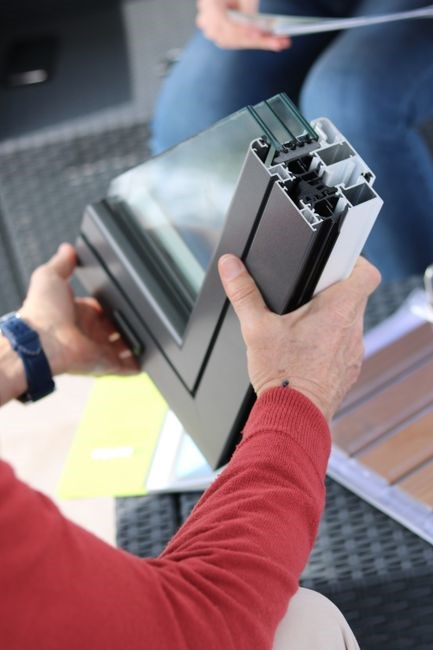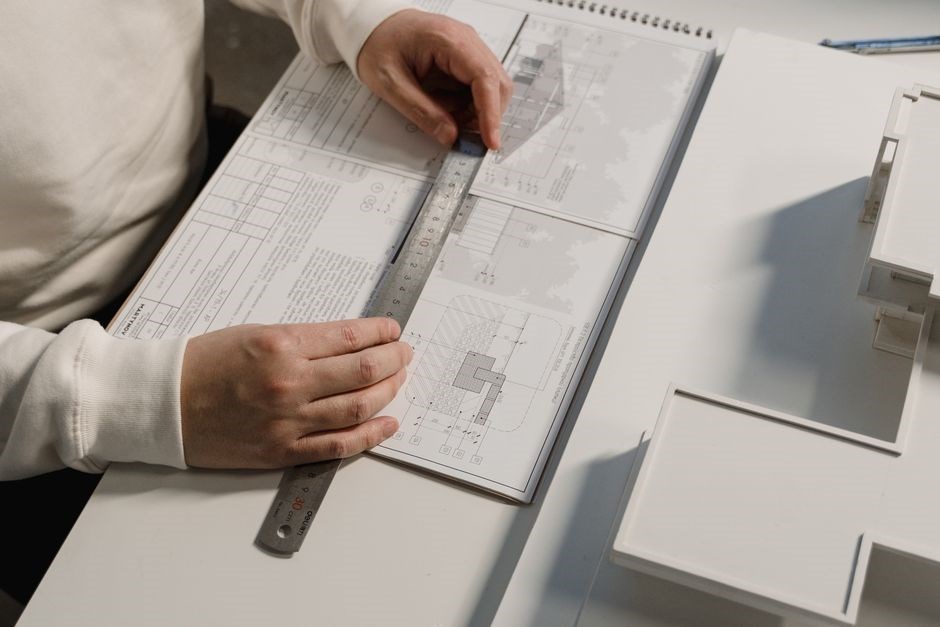
Aluminium design blends lightweight strength with versatility, enabling efficient structural solutions across automotive, aerospace, and architecture. Engineers consider alloy grades, formability, and thermal behavior to optimize performance while meeting safety and sustain, and compliance!!!!!!!!!
Historical Development and Current Applications
Aluminium’s journey began in the early 19th century when the first commercial extraction method, the Hall–Héroult electrolytic process, appeared, dramatically reducing cost and opening the door to mass production. By the 1900s, aluminium was prized for its low density and high corrosion resistance, leading to widespread use in transportation, from lightweight car bodies to the first all‑aluminium aircraft frames. The post‑World War II era saw a boom in alloy development, with the 2000, 3000, and 5000 series offering tailored strength, formability, and corrosion performance for specific sectors. In the 1960s and 1970s, aluminium became a staple in consumer electronics, thanks to its excellent thermal conductivity and electromagnetic shielding. Today, the material dominates aerospace structures, where weight savings translate directly into fuel efficiency, and is integral to high‑performance automotive chassis, marine hulls, and building façades. Modern applications also exploit advanced surface treatments—such as anodizing, powder coating, and laser‑etched finishes—to enhance aesthetics, durability, and environmental resistance. Additionally, aluminium’s recyclability, with virtually no loss of properties, aligns with global sustainability goals, making it a preferred choice for green building initiatives and circular economy projects. The design manual therefore emphasizes a holistic approach: selecting the appropriate alloy, understanding processing routes, and integrating protective strategies to meet stringent safety, performance pro

Material Properties of Aluminium Alloys
Aluminium alloys combine low density, high strength, excellent corrosion resistance, and good thermal conductivity. Common grades—2000, 3000, 5000, 6000, 7000—offer tailored mechanical and electrical properties for diverse engineering applications. More!
Mechanical and Physical Characteristics

Aluminium alloys exhibit a unique combination of low density, high specific strength, and excellent formability, making them ideal for lightweight structural components. Their tensile strengths range from 100 MPa in wrought 3000‑series alloys to over 500 MPa in 7000‑series grades, while elongation to failure typically exceeds 10 % in most engineering alloys. The modulus of elasticity is approximately 70 GPa, providing a balance between stiffness and weight. Thermal conductivity is high, with values around 200 W m⁻¹ K⁻¹ for 6061, enabling efficient heat dissipation in electronic housings and automotive heat exchangers. Electrical resistivity is also favorable, with 6061 offering about 15 µΩ cm, suitable for aerospace electrical interconnects. Corrosion resistance is enhanced by a passive oxide film that forms spontaneously, granting resistance to atmospheric corrosion and marine environments. However, aluminium is susceptible to stress corrosion cracking in high‑temperature, high‑stress scenarios, necessitating careful design. Fatigue strength is a critical parameter; 6061‑T6 can sustain over 10⁶ cycles at 50 % of its ultimate tensile strength under fully reversed loading. Hardness values, measured by Rockwell B, range from 70 HB for 3003 to 140 HB for 7075‑T6, correlating with strength and wear resistance. These mechanical and physical characteristics collectively define the suitability of each alloy for specific applications, from structural frames to heat‑sink assemblies. Machinability is generally good, especially for 3000‑series alloys, while 6000‑series alloys offer a balance between machinability and strength. The coefficient of thermal expansion is around 23 µm m⁻¹ K⁻¹, requiring design compensation in assemblies with dissimilar metals. Impact resistance is high, with 7075‑T6 showing a Charpy V‑notch impact energy of about 200 J at room temperature, making it suitable for aerospace crash‑worthy structures. Surface treatments like anodizing enhance durability. The combination of these properties allows designers to tailor aluminium alloys to specific performance criteria, balancing weight, strength, durability, and cost.

Standards and Specifications
Aluminium design follows ISO 6363, ASTM B209, and EN 573, ensuring alloy classification, mechanical properties, and chemical composition. These standards guide manufacturing, testing, and quality assurance for consistent performance worldwide.!20262026
ISO, ASTM, and EN Standards for Aluminium
ISO 6363 defines the classification of aluminium and aluminium alloys, specifying alloy numbers, chemical composition ranges, and mechanical property requirements. ASTM B209 provides a comprehensive set of standards for aluminium and aluminium alloy extruded bars, rods, wire, and plates, covering dimensions, tolerances, and surface finishes. EN 573-3 classifies aluminium alloys by chemical composition, while EN 573-4 addresses mechanical properties, including tensile strength, elongation, and hardness. These standards ensure consistency in material selection, facilitate interoperability across international supply chains, and support compliance with safety and performance regulations. Engineers must reference the appropriate standard for each application, whether designing lightweight structural components, heat exchangers, or architectural facades. Adherence to these specifications also enables traceability, quality assurance, and certification processes essential for aerospace, automotive, and marine industries. The integration of ISO, ASTM, and EN guidelines into the design workflow promotes best practices, reduces risk, and aligns with global sustainability goals by optimizing material usage and lifecycle performance. By adhering to these standards, designers can predict material behavior, streamline procurement, and achieve regulatory compliance across sectors, fostering innovation, safety, and aluminium applications, supporting circular economy initiatives for resilience.
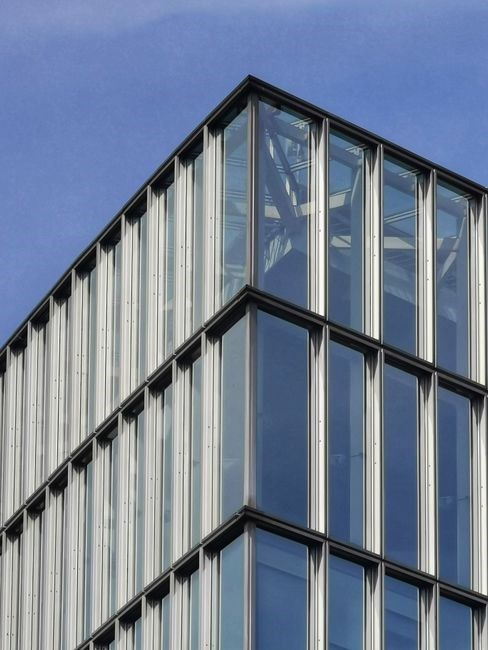
Design Considerations for Structural Components
Engineers evaluate aluminium alloys for load capacity. Design must balance weight, stiffness, and manufacturability, using finite‑element analysis to predict stress distribution and ensure safety margins across service conditions in high temp, load!
Load Analysis and Fatigue Life
Accurate load analysis is paramount for aluminium structural components, as it directly influences fatigue life predictions and safety margins. Engineers employ advanced finite‑element models to simulate complex loading scenarios, incorporating material anisotropy, temperature effects, and residual stresses from manufacturing processes. The selection of alloy grade—such as 6061 for moderate strength or 7075 for high‑strength applications—determines the baseline yield and ultimate tensile strengths, which are critical inputs for fatigue life estimation. Fatigue analysis typically follows the S–N curve methodology, where stress amplitude is plotted against the number of cycles to failure. Modern approaches integrate the Miner’s cumulative damage rule to account for variable amplitude loading, while also considering mean‑stress corrections like the Goodman or Gerber criteria to refine safety factors. Surface finish and residual stress relief treatments, such as cryogenic or shot‑peening processes, can significantly reduce the initiation of micro‑ processes, thereby extending fatigue life. Additionally, the geometry of the component—particularly stress concentrators such as fillets, notches, or sharp corners—must be optimized through iterative design and simulation to minimize peak stress ratios. The use of fracture‑mechanics‑based fracture toughness parameters (K_IC) allows for a more accurate prediction of propagation rates under cyclic loading. In practice, engineers often employ a combination of analytical calculations, numerical simulations, and experimental validation through tests to calibrate material models. By integrating these multi‑disciplinary techniques, designers can achieve a robust balance between weight savings, structural integrity, and longevity in aluminium‑based systems.

Corrosion and Environmental Protection
Aluminium’s natural oxide layer offers self‑protective qualities, yet exposure to chloride, salt spray, or acidic environments can accelerate pitting and galvanic corrosion. Protective strategies include anodizing, powder coatings, and cathodic protection,each tailored to service conditions and alloy choice.
Oxidation, Galvanic Corrosion, and Protective Coatings
Aluminium naturally forms a thin, adherent oxide film that protects the metal from further attack. This passive layer, composed of Al₂O₃, is self‑replenishing in air and provides excellent resistance to uniform corrosion. However, in aggressive media such as chloride‑rich seawater or acidic solutions, the oxide can be locally disrupted, leading to pitting or crevice corrosion. When aluminium is in electrical contact with a more noble metal—such as copper, steel, or nickel—galvanic corrosion can occur. The anodic aluminium dissolves preferentially, and the rate depends on the potential difference, surface area ratio, and electrolyte conductivity. To mitigate these effects, designers employ a range of protective coatings. Anodizing thickens the oxide layer electrochemically, enhancing corrosion resistance and allowing dye or colorant impregnation for aesthetic purposes. Electrophoretic deposition (EPD) and powder coating provide uniform, high‑density barriers that seal pores and inhibit chloride ingress. In high‑temperature or high‑humidity environments, chromate conversion coatings or epoxy primers can be applied before a topcoat to improve adhesion and corrosion protection. Cathodic protection, either sacrificial anode or impressed current, is also used for critical components exposed to seawater or underground. Selecting the appropriate coating system requires balancing cost, environmental regulations, service life, and mechanical compatibility with the aluminium alloy and its intended application.

Manufacturing Processes and Joining Techniques
Aluminium fabrication relies on extrusion, forging, and casting, each shaping the alloy’s microstructure. Joining methods—TIG, MIG, laser, friction stir, and adhesive bonding—offer tailored strength, minimal distortion, and design flexibility.!!!
Extrusion, Casting, Welding, and Adhesive Bonding
Extrusion shapes aluminium by forcing heated alloy through a die, producing complex cross‑sections with uniform grain flow and high dimensional stability. The process is ideal for long‑length components such as structural members, heat‑sinks, and automotive chassis parts, offering superior strength‑to‑weight ratios and excellent surface finish. Casting, whether gravity, sand, or die, allows the creation of intricate geometries and internal cavities that would be impossible to machine. By controlling cooling rates and alloy composition, cast parts achieve high density, low porosity, and tailored mechanical properties suitable for aerospace brackets, marine fittings, and architectural panels. Welding techniques—TIG, MIG, laser, and friction stir—provide robust joints while preserving aluminium’s inherent corrosion resistance. Each method requires precise heat input control to avoid distortion, cracking, or loss of strength. Adhesive bonding, using epoxy or polyurethane systems, offers a complementary approach that eliminates thermal stresses, distributes load evenly, and can join dissimilar materials. Proper surface preparation, primer application, and curing protocols are essential to achieve long‑term joint integrity. Together, these manufacturing and joining methods form the backbone of modern aluminium design, enabling lightweight, high‑performance structures across diverse industries.
The combination of extrusion and high‑strength alloys lets designers meet safety standards while keeping weight low and saving money.

Thermal and Acoustic Performance
Aluminium’s high thermal conductivity (~200 W/m·K) efficiently dissipates heat, while its low density keeps structures light. Acoustic damping is enhanced by alloying and surface treatments, reducing vibrations in aerospace panels and automotive interiors. Thermal expansion is modest, stability.!!!!!!!!
Heat Transfer, Thermal Expansion, and Sound Dampening

Aluminium’s exceptional thermal conductivity, typically around 200 W m⁻¹ K⁻¹, allows rapid heat dissipation in high‑performance components. Designers exploit this property to manage temperature gradients in aerospace skins, automotive radiators, and electronic enclosures. The coefficient of thermal expansion (CTE) for common 6000‑series alloys is about 23 µm m⁻¹ K⁻¹, which is moderate compared to steel and enables predictable dimensional changes under load. Engineers must account for CTE mismatches when joining aluminium to composites or ceramics, often using compliant interlayers or engineered fasteners to mitigate residual stresses. Sound dampening is achieved through alloy selection, surface roughening, and the incorporation of porous fillers. For instance, adding 5–10 wt % of silica or glass beads reduces acoustic transmission by up to 15 dB in the 1–10 kHz range. Finite‑element analysis (FEA) models predict modal frequencies and vibration amplitudes, guiding the placement of ribs or honeycomb cores to suppress resonances. Surface treatments such as anodizing or laser texturing increase surface roughness, enhancing acoustic absorption without compromising structural integrity. In thermal‑acoustic coupling, designers balance heat flux paths with acoustic impedance to prevent hot spots that could amplify noise. By integrating computational fluid dynamics (CFD) with sound solvers, the aluminium design manual provides guidelines for selecting alloy grades, thicknesses, and geometries that meet rigid thermal and audio performance criteria while maintaining lite efficiency!!!!